
Ever wondered how fibre optic networks actually make their way into the ground beneath our feet? Bringing fast, reliable connectivity to communities is more than just plugging in a cable, it is a carefully planned process involving civil works, protective conduit, and precise fibre installation.
Different construction methods
There is no ‘’one size fits all’’ approach. The way fibre is installed depends on the local environment, ground conditions and the project requirements. The two main methods are:
- Trenching – A narrow trench is dug, conduit is laid inside, and the trench is backfilled.
- Horizontal Directional Drilling (HDD) – A steerable drill bores a path underground without open excavation. Conduit is pulled through the borehole, making this method ideal for crossing under roads, rivers or built-up areas where trenching is not practical. The HDD process involves three main phases:
- Pilot hole drilling: The drill head is steered along the designed path underground. Operators use a tracking system, often a walkover locator, to guide and adjust direction from the surface. The drill head is equipped with a slant face, which allows it to be rotated or pushed at an angle to change direction. This steering lets the team avoid existing utilities or underground obstacles.
- Pullback: Finally, the product pipe is attached to the drill string using a swivel and pulled back through the hole. The swivel allows the pipe to follow the bore path without rotating, reducing stress and preventing damage.
- Reaming: After the pilot hole is completed, a reamer is pulled back through the borehole to enlarge it. The hole must be big enough to fit the final product pipe. In some cases, multiple reaming passes are done, each with a larger reamer. Drilling fluid continues to flow during this step to carry out cuttings and keep the borehole open.
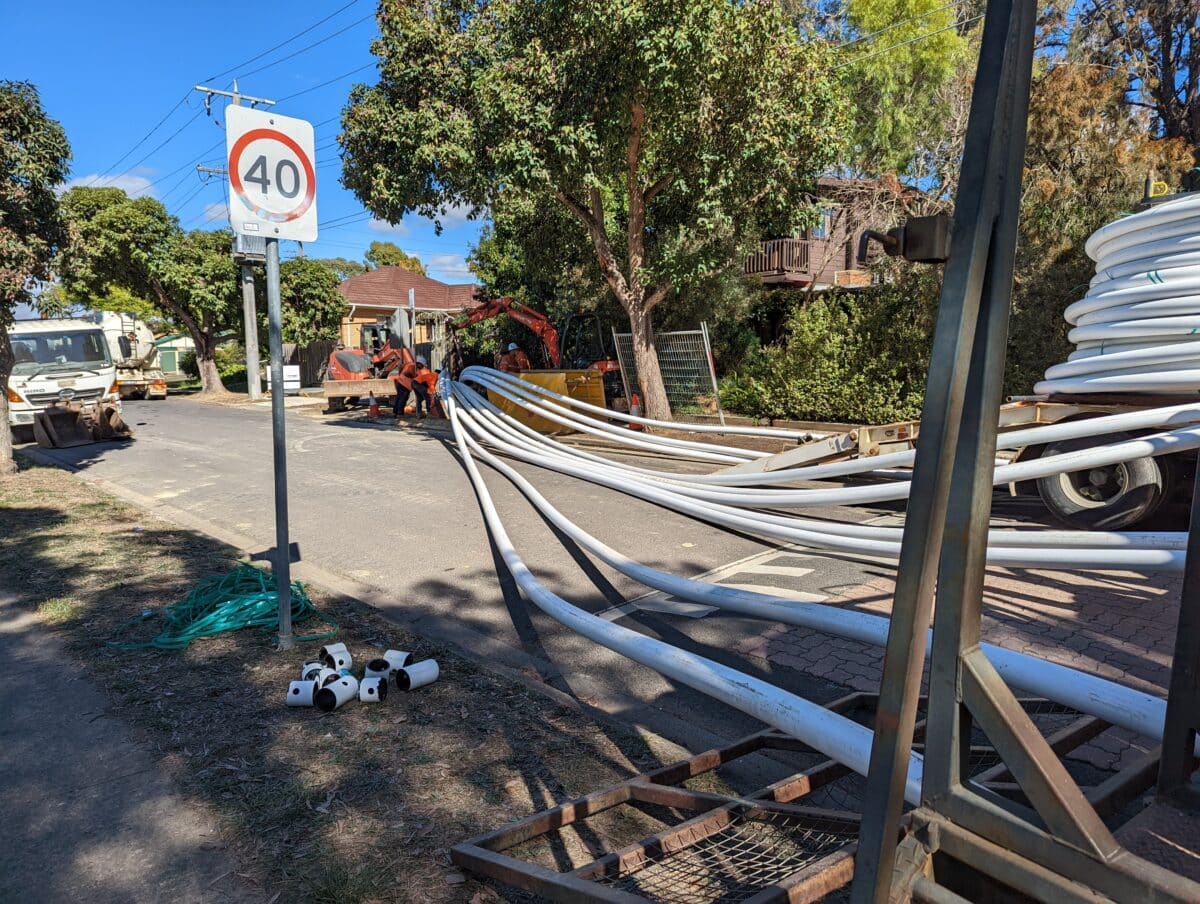
HDD works
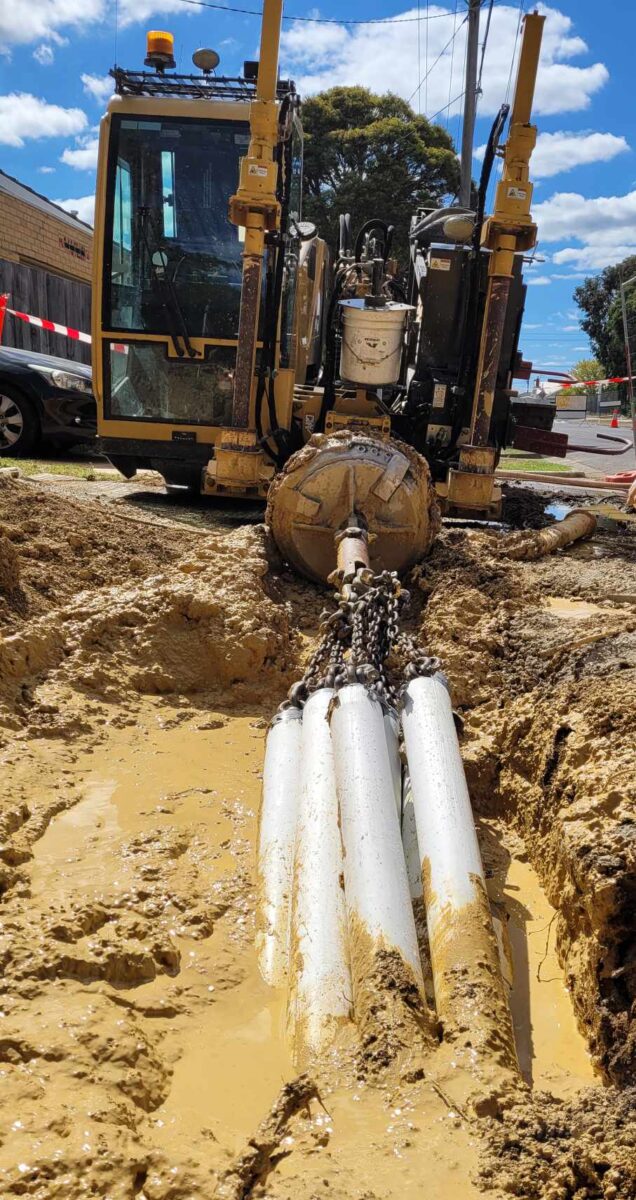
Installing cable
Once the conduit is secure, fibre optic cables are installed inside, this is done using cable hauling – where fibre is pulled through using ropes and winches.
Building for the future
Every stage of this process is about ensuring that the fibre network is robust, reliable and ready to handle the ever-increasing demand for connectivity. With the right construction methods and protective conduit, fibre cables can stay secure and functional for decades, delivering the speed of light directly to homes and businesses.
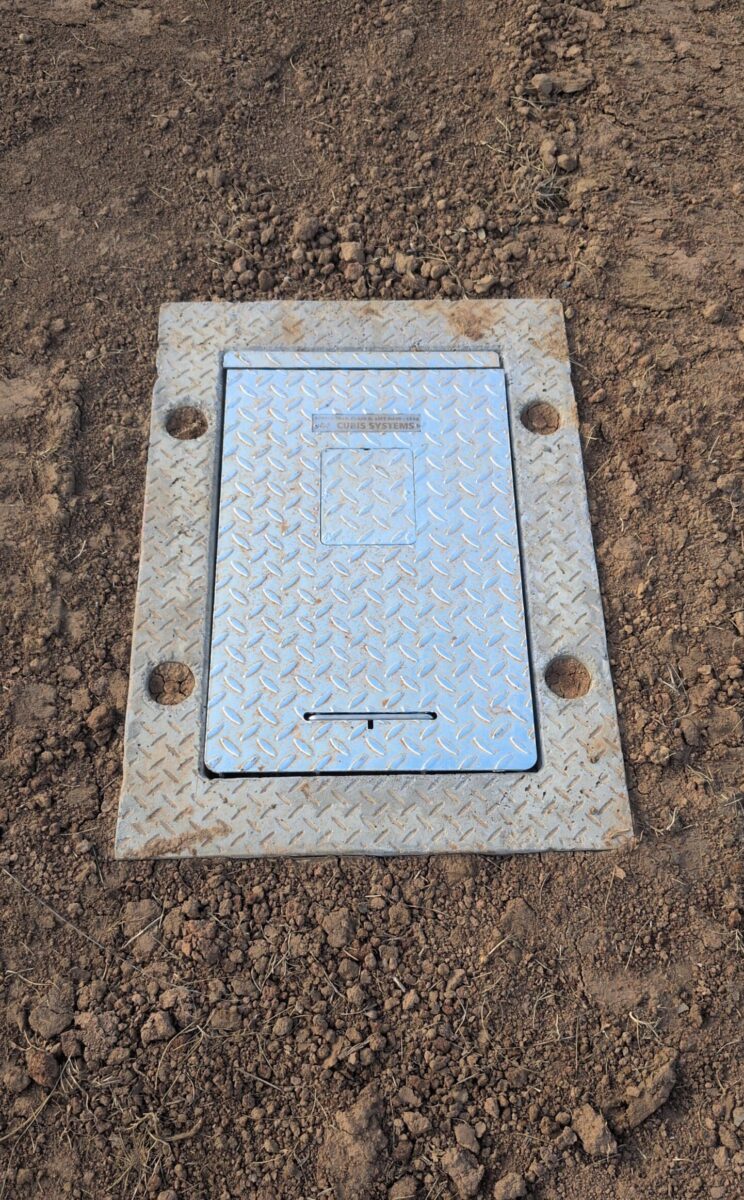
Concrete pit with lockable lid
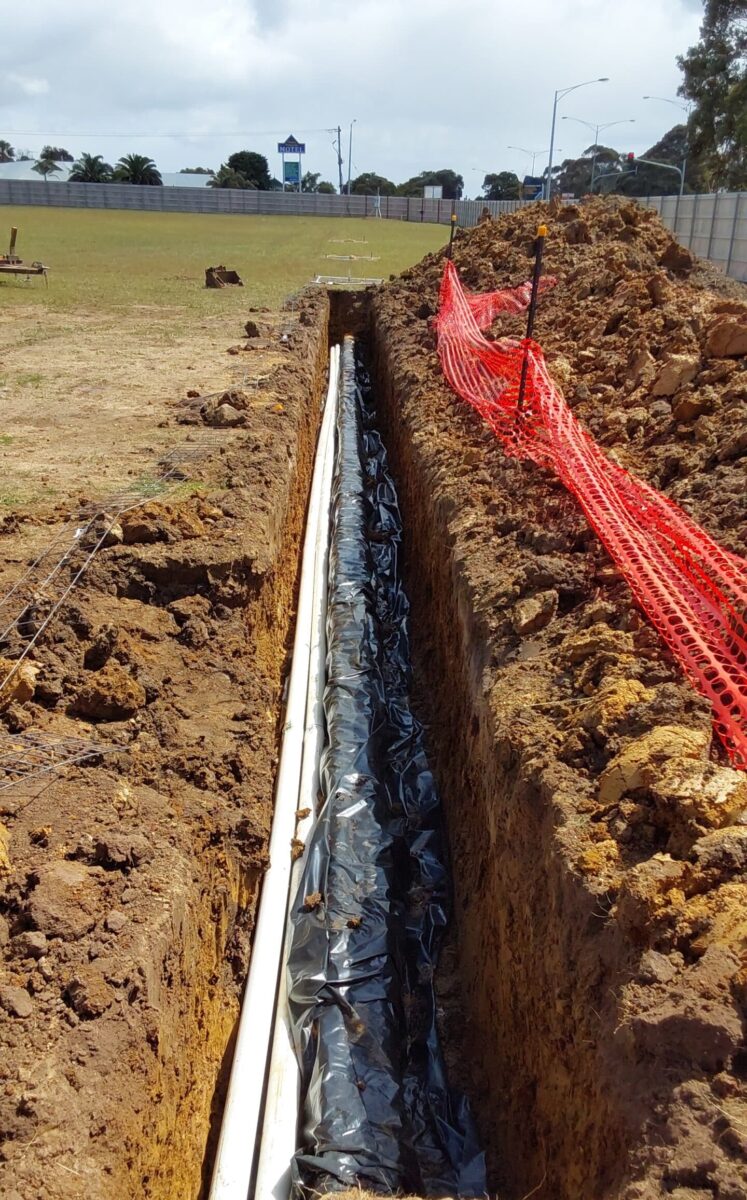
Open trench with new comms pipe
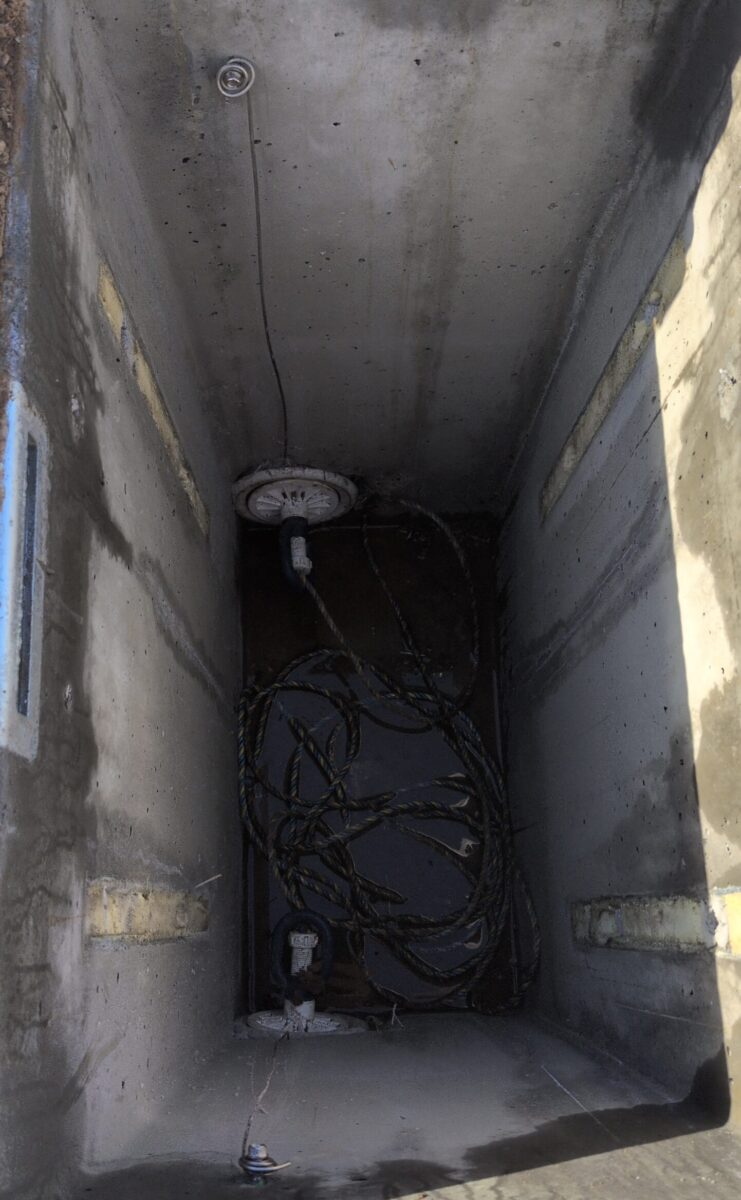
Concrete pit with conduit entries, rope and conduit seals.